Sunday, December 12, 2010

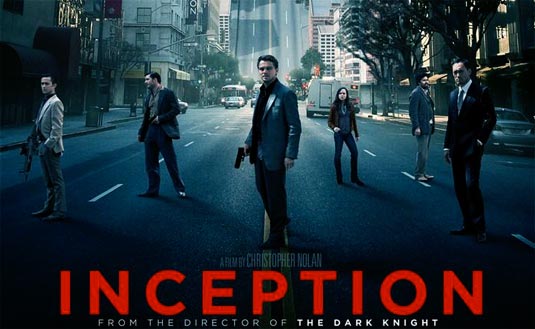
"Inception" Review


The past decade has been a drought for truly creative and speculative science-fiction. Hollywood has become over-blown with explosions and one action scene after another to move a plot with an interesting idea, and let go of what that story had that was so fascinating to begin with. Hollywood has forgotten that the most beloved and time-testing sci-fi stories don’t deal with action, but deal with fascinating and heartfelt ideas. Director Christopher Nolan has not forgotten this notion. Nolan works with his amazing cast to tell a story that not only amazes and thrills you, but renews faith in the fact that there are still amazing untapped ideas to be had in the magic that is cinema.
Dom Cobb, played by Leonardo DiCaprio, and his team work in extracting ideas and thoughts from the mind during the dream-state. Cobb and his team find themselving faced with performing the impossible. The task is to not steal an idea, but to plant one while facing the many dangers in not just the mind of the mark, but the dangers from Cobb’s own mind.
The cast for this film is top notch. Dicapro is fantastic as our hero Cobb. The supporting cast has a great chemistry and nobody is trying to steal the show. Everyone has potential to be your favorite character. Fantastic cast and performances all-around.
The screenplay to this film is ingenious. While the film’s structure is simple enough, Nolan delivers a film that leaves an audience with an infinite number of possibilities, but everyone will have their own interpretation. When a film can leave an audience with numerous thoughts on the ending, the film has truly achieved something new and inventive in its narrative. Without giving away spoilers, the film’s idea is intriguing in dealing with the notion of dreams and how they can grow to make or break a human mind. The screenplay while not emotionally driven, is driven by just the originality on how the film is presented. This science fiction film is structured as a heist film. A heist film that takes place in a world of the dream where all the characters are stationary and asleep.
In terms of where this film breaks new ground, apart from the screenplay, this film breaks new ground in the editing and the shooting of the picture. The picture was mostly shot with the notion of not using CGI as a quick answer to a technical problem. Everything in the movie feels real and feels as if everything is presented in a new and fresh way in terms of the world of the dream. The shooting of the picture puts all the amazing visuals, the elevator or the zero-gravity sequences, on-screen practicially to where you feel you haven’t seen a film like this before.
In the editing realm of the picture, Nolan breaks new ground in cross-cutting action spreading across three different worlds. Seeing how an action in one dream world interacts with the other worlds is cut in a way that is thrilling, intense, and has you gripping to your chair. By the end of the picture, you feel as if you had just been put through an intellectual ringer. While the film maybe emotionally-lacking at points for most of the characters, Nolan gives you a fantastic action film that is jam-packed with ideas, like most long lived speculative science-fiction.
In essence, Nolan gives us a dream world that must be seen to be experienced. You have not seen a film like this before. Everything in the film is presented in a fresh new and thrilling way. Nolan has delivered perhaps his most personal and well-crafted film with “Inception.” Everyone will have a different interpetation of the ending as it floors you and leaves you with a question. Nolan’s film feels like it is more interested in the journey and the idea, rather than the ending, and that’s what has sorely been lacking in storytelling lately. This is a speculative science-fiction that is akin to the minds of Kurt Vonnegut or Phillip K. Dick. This is the best and most original science fiction epic since 1999s groundbreaking "The Matrix." Nolan has delivered a masterwork that reminds the audience, as Emes (Tom Hardy) says in the picture, “You mustn’t be afraid to dream a little bigger, darling.”

"127 Hours" Review


“I can do everything on my own.” says Aaron Ralston, played brilliantly by James Franco. The underlying reality behind this moving story is that despite this man being a perfect human specimen, he is undone by his selfishness and pays the ultimate price for his forced solitude in getting into the situation that pins him. Ralston’s The combined directorial efforts of Danny Boyle and the above-par acting talent of James Franco, both guaranteed to draw attention come Oscar time, work together to craft an emotionally driven film that inspires and leaves you with a renewed love for life and the belief that nothing is stronger than the human will to overcome any and all obstacles.
The film’s story the real-life events following a selfish and isolated man, Aaron Ralston, who on a canyon-land hike whose arm gets trapped in a canyon by a huge bolder and the film tells his struggle to stay alive for 127 Hours in a canyon with little to no resources. The film works mostly as a one-man show by Franco. Franco delivers the performance of his career as he turns a fairly unlikable character and adds layers of depth to his character. As the audience spends more time with Ralston, Franco gives the character enough empathy with each moment that passes, that by the end the films works up to an emotional crescendo that floors you. Franco’s performance is fantastic as he gives you a portrait of a person who is breaking down the longer he is trapped in that canyon, but in his breakdowns he realizes what he faults are as a human being. Watching these epiphanies unfold on-screen charges up the audience’s connection to Raltson to an extent that when that ending finally does come, the audience, along with Ralston, are feeling that intense and agonizing pain. Franco’s performance is emotionally connected and deep in all the right ways that it’s tough to not think about his portrayal as fantastic in looking back at the film.
The other star of this film is Boyle. Boyle’s job is an impossibly difficult one in that he is narratively confined telling a story about a man stuck in a small space of a canyon. Boyle has to pull every trick he knows as a director to make this film compelling and exhilarating. The editing style is amazing as Boyle figures out a way to convey the wants, needs, and the suffering a character. Never has one wanted to grab a drink more than when walking out of this film. An amazing shot comes in the film when Franco’s character has been stuck for a prolonged amount of time only to realize he has a bottle of unopened Gatorade lying and condensating with beads of water in his car. The shot that follows gets across that thirsty feeling that you just want that bottle more than Franco does, and you aren’t even stuck in the canyon. Boyle does a fantastic job with the direction and he plays to the strengths to the challenges the film throws at him.
Overall, Boyle and Franco put together a film that at best renews your faith in others and what life has to offer. The film presents the notion that a life of solitude is although efficient, it’s not a human way to live your life to the fullest. We all need someone in our lives. Be it all those relationships, friendships, and family, we are all connected and we deserve more than living the empty life that Ralston used to live before the ordeal. “This rock has been following me my whole life.” says Ralston as he comes to realize what his life as amounted to before...well you already know the ending.

Friday, November 19, 2010

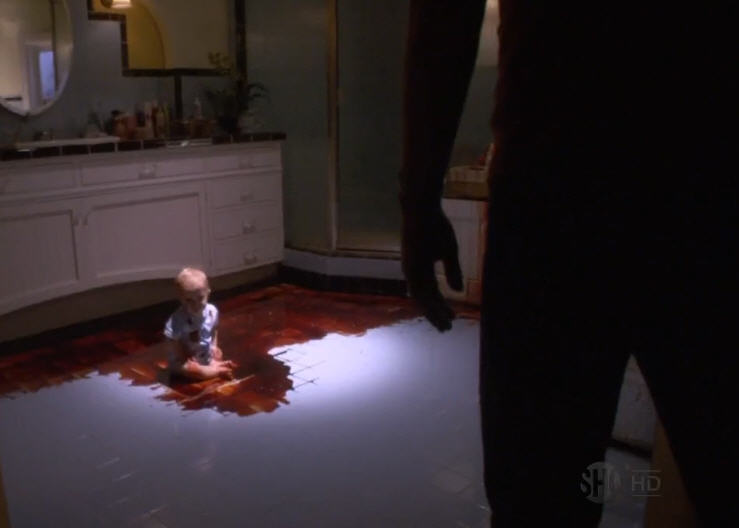
Dexter S04E12 "THE GETAWAY" Review


Blood sets Dexter Morgan’s teeth on edge, but the season four finale of “Dexter” has enough twists and turns to pump your blood with enough adrenaline for you to not notice you’ve chewed your nails off till its shocking conclusion. Showtime Channel’s Emmy nominated “Dexter”, based on the Jeff Lindsey novel “Darkly Dreaming Dexter,” started in syndication in the fall of 2006. Serial killer Dexter Morgan (Michael C. Hall) is a Miami PD Blood Spatter analyst by day and vigilante serial killer by night.


The series began with Dexter as a cold, solitary, and emotionless monster and by the start of this season he has come to learn he does feel emotion and starts a family, while quenching his need to kill. The main storyline of the episode has Dexter tying up all the loose ends with the Trinity Killer (John Lithgow) in an intense game of cat-and-mouse. Trinity has discovered Dexter’s ruse with him and plans to flee town after a killing spree that has evaded the Miami P.D. for decades.
The story for the episode takes the relationship the season has built so far between these two killers and relentlessly throws curve balls as you watch both of these calculating serial killers throw each other off their game as they up the stakes on each other. Trinity comes to the Dexter’s station and threatens him to leave him alone. Dexter chases and incapacitates Trinity only for Trinity to escape later when Dexter is arrested for fleeing the scene of a car crash during the pursuit. The script throws both of these characters into a chase that brings the world crashing down on each other. They both are putting each other at risk of losing everything. Dexter’s pursuit is putting Trinity at risk of being discovered after evading justice for 30 years and Trinity’s pursuit puts our hero at risk of losing his new family and revealing his killing tendencies to the world. All bets are off by the start of this episode. The tension and the stakes have never been higher and it keeps you on edge.


Hall’s brilliant portrayal of a vigilante serial killer walks the line between dark comedy and creepy as he tries to overcome his “dark passenger” for the sake of keepin his new family. Hall is at his A-game with his performance in this episode as you watch him slowly break down and get more emotional than he’s ever been on the show. A Great performance by Hall, but the standout performance is the chilling one by Lithgow as Trinity. Lithgow is the best antagonist this show has had by a long shot. Lithgow, better known as for his comedic role as High Commander Dick Salmon in “Third Rock From the Sun,” delivers the performance of his career with his role. Trinity’s arc is layered as the audience sees he is far worse killer than Dexter could ever want to be.
The conclusion between these two reach a sympathetic note, only to lead to a reveal that will go down as one of the most shocking endings for a season finale in television with the Death of Dexter’s wife. The script ends on a melancholy mood dying for the next season because of the possibilities the show opens itself with the loss of a character as important to our hero’s humane-side for the past four seasons as Rita Morgan (Julie Benz) has been. The ending is indicative of the risks the show is willing to take to avoid staleness and repetition. You can’t help but applaud the writers for giving the fourth season such a memorable finish. Overall, the show has reached a new realm with how well each episode has built up to this climatic and exciting conclusion. It’s going to be extremely difficult for the show to top itself next season as it has done each year. This season is nothing short of masterful in making the audience emotionally connected to where the characters have gotten to, but also terrified and excited for where they are all going.

Sunday, November 14, 2010

THE CROW PAGE 38


Andres Gallego
11-14-2010
Reviewing The Arts
“The Crow Page 38” by James O’Barr

A place of intense pain and anguish can produce truly moving art, and it is such the case with James O’Barr’s “The Crow.” The experience of seeing his work is a mental challenge as it asks you to almost take your emotional temperature in an odd way. “It wasn’t like she had an illness or something that was anticipated. Just one day out of the blue, someone decided to get drunk and drive down a side street at 70 miles an hour and suddenly she was just gone. I don’t know if I actually believed in a god, but if I did I really felt betrayed by him. Why make this beautiful perfect flower and just trample it? What was the meaning of that? I almost felt like I was being punished like I’d finally been shown this thing and allowed hold it for just a moment and then it was taken away as a bitter joke. I definitely lost my faith in human nature for awhile there.” Recalled comic book author O’Barr on the incident that triggered the creation of his cathartic graphic novel “The Crow.” O’Barr created this story about a man who returns from the dead to seek justice for the gang murder of his girlfriend and himself, after experiencing a state of intense pain with the loss of his fiancĂ©’ and not knowing how to deal with it. The graphic novel is filled with many astounding panels, but the one that truly stands out is page 38. Page 38 is where you feel and smell O’Barr’s blood, sweat, and tears the vividly on. You can sense that this may have been the most difficult thing O’Barr had to draw because in this panel, a ghost figure and a crow are getting ready to take away Shelly from Eric in a grisly manner.

The female, Shelly, represents a pure spirit with her being bare and naked. “Shelly was a just a literal translation of Beverley. I just tried to capture her innocence. Eric was a vehicle for my emotions since I was never quite comfortable in drawing myself.” as O’Barr explains the intention he had in drawing these characters. The Crow and Skull Cowboy (only his gun is shown) are the manifestation of all the negativity and the darkness that can come from life. Most importantly on the panel, you can sense that Eric is O’Barr’s wanting of not wanting to lose that moment with a loved one. As if Eric is demanding for time to not move on and he desperately doesn’t want to lose that white light in his life. The gun in that sequence represents the cold power of life in that scene. A gun has so much potential power in the fact that the loud shots fired have taken lives, changed history, and causes insant fear. Looking deeper into the page, the page is a three act structure. The first act is that sense of euphoric sense of happiness you get in a wonderful relationship translated into the line “Here’s where you smile”. The second act, is that moment you do want that light in your life for the rest of your life and you make the inner pact in yourself to never let it go. That second act is translated to the line “Now the Eternal Love part.” Then the last act is the crow and the Skull Cowboy readying to take away this happiness in Eric’s life. That third act is translated into the line “Idiot.” What O’Barr is trying to say in the page is that happiness, while sublime, will never last. There is no such thing as eternal happiness. Looking at the page, the crow is the only thing that looks towards the camera. Although Eric is a manifestation of O’Barr’s emotions, The Crow is a manifestation of O’Barr’s bitterness and anger towards the world. The whole page is O’Barr himself is referring to the reader and him breaking the forth wall in a metaphorical sense.

Overall, this page is definitely rooted in a place of intense bitterness and anger towards the world and you can sense O’Barr’s distain for life and human nature in this panel. It captured his emotional state so vividly and better than any panel that O’Barr almost makes it impersonal with the framing of each of the characters on the page. These are his dreams and memories. You are outside and given only a peek into his world. While hard to feel anything positive has come from this page in the end, the page makes you feel that sense of loss that O’Barr had at that point in his life. Anybody can relate and recall a moment that they lost someone important in their life, and O’Barr hits that emotional nail straight on it’s head. While O’Barr’s artwork while disturbing, it’s personal and elegantly beautiful. Something that is seldom seen in today’s comics and graphic novels. Overall, O’Barr’s artwork is moving and emotionally charged with every line that it asks you to feel the intense pain that the author endured. With the experience of viewing this piece, you come to know O’Barr more personally without having to have met him.

Sunday, November 7, 2010

Calvin Harris, "Ready for the Weekend" Review Rewrite

Calvin Harris, “Ready for the Weekend” (Fly Eye, Columbia, 2009)

With the help of the Myspace internet community Calvin Harris has become one of the United Kingdom’s most prolific up and coming artists. After releasing a couple of demos on the website for a couple of years, Harris signed a record deal with EMI in 2006. The label decided to take a chance and release an album by Harris. Harris burst into the Electro-pop scene in 2007 with his amusingly titled debut Album “I Created Disco.” The album surpassed expectations by remaining in the top 10 UK charts for a long while. While the album wasn’t critically praised, it had attained a small following for the Scottish native in the pop/electro scene. Harris’ first album was received by most critics as a handbag electro pop debut that showed promise for Harris with the hit singles “The Girls,” “Acceptable in the 80’s,” and “Merrymaking at my Place.” Then Harris released his follow-up album “Ready for the Weekend” in 2009.
“I Created Disco” was rough in establishing it’s tone at the start, but “Ready for the Weekend” does that effectively from first track. The album has a smooth and inviting tone showing Harris’ sense of humor. With his debut album called “I Created Disco,” it’s only fitting that this album should start with a combination of electro bass keys and a saxophone solo taken out of a blues song, only to be faded out into a full electro-bit track drowning out all but Harris’ much improved vocals with the saxophone to not sound off till the very end. This opening invites the listener in with the promise of a good time if you go for the ride and for the most part, Harris delivers. Harris took the safe route with the first album being an electronically composed one, but this time he experiments with actual instruments such as the guitar rifts in “Blue” or “Worst Day.”
You can tell Harris has taken the criticism from the last album to heart. His vocals ruined the rhythms and beats of his previous album with songs like “Colours.” This time around his vocals aren’t as clunky and don’t try to upstage his own DJ work as the melodies are the driving force of the album. With the songs “Flashback” and “I’m Not Alone,” Harris is going for a different vibe by putting more of himself and baring his soul. The last album was randomly strung together beats that sounded good without a clear theme or artist intention. Harris gives more of himself in “Flashback” with the lyrics “If I could change my state of mind/then I would disappear/The love I get from you is something I can’t chance/and I can let you slip away without a second glance.” This album displays Harris’ talents in a collaborative vocal effort with Dizzie Rascal and Chrome in the fun and inspired “Dance wiv Me.” When the album works it makes you want to pump up your fist and cheer as that roller coaster is going up that hill.
While “Ready for the Weekend” is an improvement, most of the album’s later songs all feel like filler. This half of the album loses its momentum and becomes a slower and mostly non-vocal performance with “Relax,” Limits,” and “Burn Nights.” The album falls into a stump that it never quite recovers from while you wait for the real songs to come on. This last half isn’t enough to stomp the album as the last one as “Dance wiv me” swoops in to save it and leave you with a good taste in your mouth.
“Ready for the Weekend” is still an enjoyable and more mature artistic effort from Harris. Harris still listens as an artist with a lot of potential still ahead of him. His sound is a smooth transition for those otherwise not a fan of electro-pop. The album is a great next step in the right direction for Harris. He still isn’t quite there yet as an artist, but where he is now is a really fun and highly enjoyable ride for anyone looking for something new. As Harris puts it ‘These are the good times in your life, so put on a smile and it will be alright.”

Sunday, October 31, 2010

"Almost Famous" Movie Review


If looking into the world of art with a fresh and honest point of view is tough, try being a 15 year old discovering this world for himself traveling with a band of amateur acting musicians coping with fame and fortune all at once. Cameron Crowe’s “Almost Famous” delivers a fascinating, brutally honest, and loving portrayal of the criticiqueing world in the 1970’s with enough heart to earn its place in cinema as his love letter to both critics and the fans of the magic that is music. Even non-music enthusiasts will be hard pressed to not find a heartfelt and genuine moment among the many that “Almost Famous” has to offer.

“Almost Famous” is a coming-of-age tale of 15 year old amateur writer/music critic William (Patrick Fugit) as he embarks on a long assignment for Rolling Stone Magazine with rock band “Stillwater” as he comes to realize what it truly takes to be both honest with himself as a critic and everyone else in this world he is embarking to learn of. While the 1970’s is an interesting time to set the film in, it absolutely works thematically. It was an interesting time to look back upon since music was progressing and what it meant to be a critic and fan was becoming tainted with the rise of commerce. As the first impression that William is to the band as “The Enemy” when William started as the fan who turned into “The Friend” that the band desperately needed at this venture in their musical careers.


One of the main thrusts of the picture is the believable performance by the actors. The story is well defined in terms of its honest portrayal of the characters. A storyteller will tell you in great stories, the writer must love their characters, and it’s clear that Crowe is absolutely in love with each of them. Crowe’s script paints each of these characters in shades of gray. Russell (Billy Crudup) comes off at times as a selfish egomaniac trying to cover his tracks, be it in scenes where he is putting a good face to William or the scene where he sells band-aid Penny to save his current relationship, but the combination of Crudup’s charisma and Crowe’s writing elevates this character to a point where the audience can hate his moral choices but would gladly share a beer with. Each of these characters is portrayed as fallible human beings. Everyone is putting a face to everyone and themselves, be it William posing as an experienced writer or his mother (François McDormond) using her moral values on her son to shield her inadequacies as a parent. The emotional core of the film is the existential conflict within William.


William is a character who has grown up out of place his whole life being an overachiever, till he finds a “place” with the type of people he’s admired his whole life. Fugit’s performance is great as you can clearly read into him as he is seeing what it takes to be in this job field and the difficult choices to be made if he wants to continue on that road. The film delivers an eloquent message about what it means to grow up, chase your dreams, and the harsh realities that come with those choices be it as a rock critic or a rock star. In watching this film, you not only come to understand each of these characters, but you get to know who Crowe is as a person. This is Crowe’s most personal film as it was written based on his experiences growing up as a Rolling Stones Magazine. By the end of the film you realize exactly how finding a passion can change you and you certainly see how it changed Crowe.


Crowe, with a stellar script and a fantastic cast all around, accomplishes to deliver a film that is both an indictment as well as a loving celebration of criticism and rock music while being a profound film about a young man going through an existential crisis. Overall, a Fantastic and meaningful film!

Saturday, October 23, 2010

Calvin Harris: Ready for the Weekend (Fly Eye, Columbia; 2009)


Calvin Harris, who with the help of the myspace internet community has become one of the United Kingdom’s most prolific up and coming artists, burst into the Electro-pop scene with his 2007 amusingly titled debut Album I Created Disco. Since the album’s release, it has enjoyed an expectation surpassing longevity in the top 10 of the UK charts. While the album wasn’t critically praised, it had attained a small following for the Scotland native in the pop/electro scene. Harris’ first album was received by most critics as a handbag electro pop debut that showed promise for Harris with the hit singles “The Girls,” “Acceptable in the 80’s,” and “Merrymaking at my Place.” Then Harris released his follow-up album Ready for the Weekend in 2009.

The last album had a tough time establishing its tone at the start, but Ready for the Weekend does that right from the get-go with the first track “The Rain.” The album has a smooth and inviting tone showing Harris’ sense of humor. With his previous album being called I Created Disco, it only seems fitting that his next electro-pop effort should start with a hybrid of both electro bass keys mixed with a Saxophone solo taken out of the bravado of a blues song, only to be completely cross faded out into a full electro-bit track with the electronic elements drowning out all but Harris’ much improved vocals and the saxophone to not sound off till the very end of the track. This opening invites the listener in with the promise of a good time if you go for the ride and for the most part, Harris delivers. Harris took the safe route with the first album being an all electriconically composed album, but in this album he experiments with actual instruments such as the guitar rifts in “Blue” or “Worst Day”

With this opening song you can tell Harris has taken the criticism from the last album to heart. Harris’ vocals ruined some of the rhythms and beats of his previous album with songs like “Colours.” This time around his vocals, while still there, aren’t as clunky and don’t try to upstage Harris’ DJ work as the melodies are the driving force of the albums songs. With the hit songs such as “Flashback” and “I’m Not Alone,” Harris is going for a different vibe with the album putting more of himself and baring his soul. The last album was a bunch of randomly strung together beats that sounded good, but there wasn’t a clear theme or artist intention apart from wanting to give the listener a fun listen. Harris gives himself with the lyrics “If I could change my state of mind, then I would disappear. The love I get from you is something I can’t chance and I can let you slip away without a second glance.” This album also displays Harris’ talents as more collaborative vocal effort with Dizzie Rascal and Chrome in the fun and dance-floor worthy song “Dance wiv Me.” The album when it works, makes you just want to pump up your fist and cheer as that roller coaster of a tune is going up that hill, until the roller coaster comes down that hill and you're waiting for the next drop down that hill.

With all the improvements, some of Harris’ flaws have followed him in this album. While Ready for the Weekend is an improvement from I Created Disco, most of the album’s songs, apart from the name worthy ones, all feel like filler. The latter half of the album loses its momentum and becomes a slower and mostly non-vocal performance with the songs “Relax,” Limits,” and “Burn Nights.” The album goes into a stump that it never quite recovers from while you wait for the real songs to come on. The last half isn’t enough to stomp the album as it did last time just as the fun and energetic song “Dance wiv me” swoops in to save the album’s momentum and leave you with a good taste in your mouth.

“Ready for the Weekend” is a flawed, still enjoyable, and more artistic effort from Harris, whose music still listens as an artist with a lot of potential still ahead of him. Harris is a difficult artist to compare to. His sound is unique and although he is in the electro-pop genre, not too many have had as much widespread success as he has. Harris’ sound is a smooth transition for those otherwise not a fan of electro-pop. The album is a great next step in the right direction for Harris, who still isn’t quite there yet as an electro-artist, but where he is now is a really fun and highly enjoyable ride for anyone looking for something new, despite its flaws. As Harris puts it "These are the good times in your life, so put on a smile and it will be alright.”