Showing posts with label Reviewing the arts. Show all posts

Sunday, December 12, 2010

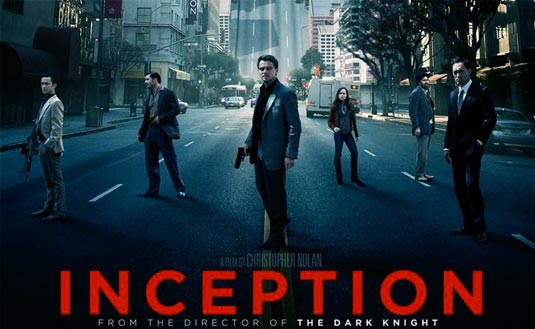
"Inception" Review


The past decade has been a drought for truly creative and speculative science-fiction. Hollywood has become over-blown with explosions and one action scene after another to move a plot with an interesting idea, and let go of what that story had that was so fascinating to begin with. Hollywood has forgotten that the most beloved and time-testing sci-fi stories don’t deal with action, but deal with fascinating and heartfelt ideas. Director Christopher Nolan has not forgotten this notion. Nolan works with his amazing cast to tell a story that not only amazes and thrills you, but renews faith in the fact that there are still amazing untapped ideas to be had in the magic that is cinema.
Dom Cobb, played by Leonardo DiCaprio, and his team work in extracting ideas and thoughts from the mind during the dream-state. Cobb and his team find themselving faced with performing the impossible. The task is to not steal an idea, but to plant one while facing the many dangers in not just the mind of the mark, but the dangers from Cobb’s own mind.
The cast for this film is top notch. Dicapro is fantastic as our hero Cobb. The supporting cast has a great chemistry and nobody is trying to steal the show. Everyone has potential to be your favorite character. Fantastic cast and performances all-around.
The screenplay to this film is ingenious. While the film’s structure is simple enough, Nolan delivers a film that leaves an audience with an infinite number of possibilities, but everyone will have their own interpretation. When a film can leave an audience with numerous thoughts on the ending, the film has truly achieved something new and inventive in its narrative. Without giving away spoilers, the film’s idea is intriguing in dealing with the notion of dreams and how they can grow to make or break a human mind. The screenplay while not emotionally driven, is driven by just the originality on how the film is presented. This science fiction film is structured as a heist film. A heist film that takes place in a world of the dream where all the characters are stationary and asleep.
In terms of where this film breaks new ground, apart from the screenplay, this film breaks new ground in the editing and the shooting of the picture. The picture was mostly shot with the notion of not using CGI as a quick answer to a technical problem. Everything in the movie feels real and feels as if everything is presented in a new and fresh way in terms of the world of the dream. The shooting of the picture puts all the amazing visuals, the elevator or the zero-gravity sequences, on-screen practicially to where you feel you haven’t seen a film like this before.
In the editing realm of the picture, Nolan breaks new ground in cross-cutting action spreading across three different worlds. Seeing how an action in one dream world interacts with the other worlds is cut in a way that is thrilling, intense, and has you gripping to your chair. By the end of the picture, you feel as if you had just been put through an intellectual ringer. While the film maybe emotionally-lacking at points for most of the characters, Nolan gives you a fantastic action film that is jam-packed with ideas, like most long lived speculative science-fiction.
In essence, Nolan gives us a dream world that must be seen to be experienced. You have not seen a film like this before. Everything in the film is presented in a fresh new and thrilling way. Nolan has delivered perhaps his most personal and well-crafted film with “Inception.” Everyone will have a different interpetation of the ending as it floors you and leaves you with a question. Nolan’s film feels like it is more interested in the journey and the idea, rather than the ending, and that’s what has sorely been lacking in storytelling lately. This is a speculative science-fiction that is akin to the minds of Kurt Vonnegut or Phillip K. Dick. This is the best and most original science fiction epic since 1999s groundbreaking "The Matrix." Nolan has delivered a masterwork that reminds the audience, as Emes (Tom Hardy) says in the picture, “You mustn’t be afraid to dream a little bigger, darling.”

"127 Hours" Review


“I can do everything on my own.” says Aaron Ralston, played brilliantly by James Franco. The underlying reality behind this moving story is that despite this man being a perfect human specimen, he is undone by his selfishness and pays the ultimate price for his forced solitude in getting into the situation that pins him. Ralston’s The combined directorial efforts of Danny Boyle and the above-par acting talent of James Franco, both guaranteed to draw attention come Oscar time, work together to craft an emotionally driven film that inspires and leaves you with a renewed love for life and the belief that nothing is stronger than the human will to overcome any and all obstacles.
The film’s story the real-life events following a selfish and isolated man, Aaron Ralston, who on a canyon-land hike whose arm gets trapped in a canyon by a huge bolder and the film tells his struggle to stay alive for 127 Hours in a canyon with little to no resources. The film works mostly as a one-man show by Franco. Franco delivers the performance of his career as he turns a fairly unlikable character and adds layers of depth to his character. As the audience spends more time with Ralston, Franco gives the character enough empathy with each moment that passes, that by the end the films works up to an emotional crescendo that floors you. Franco’s performance is fantastic as he gives you a portrait of a person who is breaking down the longer he is trapped in that canyon, but in his breakdowns he realizes what he faults are as a human being. Watching these epiphanies unfold on-screen charges up the audience’s connection to Raltson to an extent that when that ending finally does come, the audience, along with Ralston, are feeling that intense and agonizing pain. Franco’s performance is emotionally connected and deep in all the right ways that it’s tough to not think about his portrayal as fantastic in looking back at the film.
The other star of this film is Boyle. Boyle’s job is an impossibly difficult one in that he is narratively confined telling a story about a man stuck in a small space of a canyon. Boyle has to pull every trick he knows as a director to make this film compelling and exhilarating. The editing style is amazing as Boyle figures out a way to convey the wants, needs, and the suffering a character. Never has one wanted to grab a drink more than when walking out of this film. An amazing shot comes in the film when Franco’s character has been stuck for a prolonged amount of time only to realize he has a bottle of unopened Gatorade lying and condensating with beads of water in his car. The shot that follows gets across that thirsty feeling that you just want that bottle more than Franco does, and you aren’t even stuck in the canyon. Boyle does a fantastic job with the direction and he plays to the strengths to the challenges the film throws at him.
Overall, Boyle and Franco put together a film that at best renews your faith in others and what life has to offer. The film presents the notion that a life of solitude is although efficient, it’s not a human way to live your life to the fullest. We all need someone in our lives. Be it all those relationships, friendships, and family, we are all connected and we deserve more than living the empty life that Ralston used to live before the ordeal. “This rock has been following me my whole life.” says Ralston as he comes to realize what his life as amounted to before...well you already know the ending.

Friday, October 8, 2010

"Let Me In" REVIEW REWRITE!


There's always that nails-on-a-chalkboard reaction when audiences hear another film remake is on the way. Especially for a film embraced by critics and viewers as Tomas Alfredson's chilling Swedish vampire-film "Let The Right One In." Sometimes we get remakes that bastardize the original film and are churned out to exploit a fan-base. To all die-hard fans of the 2008 original film and novel: lay down your wooden stakes. With "Let Me In", Writer/Director Matt Reeves has not only crafted one of the best horror films of recent years, but a film that will go down, along with John Carpenter's remake of "The Thing," as one of the best remakes ever.


The basic premise revolves around a reclusive and viciously bullied boy named Owen (Kodi Smith McPhee) as he befriends a vampire-girl named Abby (Chloe Moretz). As the story between the children unfolds, a string of death and tragedy surround their friendship. Story-wise, this film is less of a remake and more of a well-told adaptation of the original Swedish novel. What Revees brilliantly changed is the Swedish landscape to the American landscape and how much that adds to the narrative while still staying true to what made the original film and the novel work to reinvent the vampire story and tell a fascinating story.


"Let Me In" takes place in Ronald Reagan-era 1983 in Los Alamos, New Mexico. During the time when Reagan famously stated "The evil was around America". This adds a chilling and frightening resonance to this vampire coming-of-age story that focuses on the violent nature of growing up and punctuates that chilling fear from the 1980s. Everything in the translation from the original Swedish landscapes works well for an American context. When watching the film, it's hard to not feel that wave of nostalgia and flashback to that moment in your childhood where you felt different from everyone else or befriended the new next door neighbor and plunked down five dollars at the local arcade together.


The writing is so textured that Revees nails it on the head with the emotional beats to where you have a strong sense of pathos to each of these characters. Moretz delivers a mature and chilling performance as Abby. McPhee's performance as Owen is hard to not have empathy for, given the sad nature of being a child of divorce and brutal bullying, a really great performance by McPhee. Richard Jenkin's brilliant performance as "the father" communicates so much with very few words and his eyes that he becomes the stand out performance from the cast.

The direction by Revees is great as well. The cinematography is gorgeous. It uses a yellow hue of streetlamps against the snow to create this gritty and realistic tone to the film. While the film is in the fantasy realm with vampires, this little touch grounds it in reality. The locations are nostalgically recognizable and they seem like that neighborhood you grew up in years past. The shots and the pacing take a leisurely approach. The long shots and slow pace allows for the audience to pick things that once you see the film again, you notice all the little subtleties that Revees put in and it makes the viewing more rewarding.

The film has so much heart that it transcends the horrific elements and becomes really a sweet coming-of-age film between a boy and a vampire-girl. Though this is a remake, don't let that stop you from seeing this. This remake stands above the rest as a film not made for a profit, but because this story deserves to be retold. Revees proves with this film that with the right storyteller and intention, there can still be some great remakes. The story is one of the more profound and original vampire stories to be told. FULL-PRICE!!

9 of 10

Friday, October 1, 2010

"Let Me In" REVIEW


There is always that nails-on-a-chalkboard reaction when audiences hear another film remake is on the way. Especially for a film embraced by critics and viewers as Tomas Alfredson's chilling Swedish vampire-film "Let The Right One In." Sometimes we get remakes that bastardize the original film and are churned out to exploit a fanbase. To all die-hard fans of the 2008 original film: lay down your wooden stakes. With "Let Me In", Writer/Director Matt Reeves has not only crafted one of the best horror films of recent years, but a film that will go down, along with John Carpenter's remake of "The Thing", as one of the best remakes ever.


The basic premise revolves around a reclusive and viciously bullied boy named Owen (Kodi Smith McPhee), as he befriends a vampire-girl named Abby (Chloe Moretz.) As the story between the children unfolds, a string of death and tragedy surround their friendship. Story-wise, this film is less of a remake and more of a well-told translation of the original Swedish story. What Matt Revees has done so brilliantly with this film is have the change to the American landscape add to the narrative.


"Let Me In" takes place in Ronald Regan era 1983 in Los Alamos, New Mexico. During the time when Regan famously stated that "The evil was around America." This change adds a chilling and frightening resonance to this vampire coming-of-age story that focuses on the violent nature of growing up and punctuates that chilling fear from the 1980's. Everything in the translation from the original Swedish landscapes works well for an American context. When watching the film, it's hard to not feel that wave of nostalgia and flashback to that moment in your childhood where you felt different from everyone else or befriended the new next door neighbor and plunked down five dollars at the local arcade together.


The writing is so textured that Matt Revees nails it on the head with the emotional beats to where you have a strong sense of pathos to each of these characters. Chloe Moretz delivers a mature and chilling performance as Abby. Kodi Smith-McPhee's performance as Owen is hard to not have empathy for given the sad nature of being a child of divorce and brutal bullying. Just a really great performance by Kodi. Richard Jenkin's brilliant performance as "The Father" communicates so much with very few words and his eyes that he becomes the stand out performance from the cast.

This film doesn't try to outdo the original film, but brilliantly reinterprets some of the events and attains it's own identity. The film has so much heart, that it transcends the horrific elements and becomes really a sweet coming-of-age film between a boy and a vampire-girl. Don't let the fact that this is a remake of a great film stop you s from seeing this. This remake stands above the rest as a film not made for a profit, but because this story deserves to be retold. In walking out of this film, the argument between the folks waiting in line shifted from whether or not this movie was any good to whether the original or this film was the superior film. Matt Revees proves with this film that with the right storyteller and intention, there can still be some great remakes. FULL-PRICE!!

9 of 10

Saturday, September 25, 2010

What makes a good critic? Debatable…

Andres Gallego
09/25/2010
Reviewing the arts

What makes a good critic? Debatable…

In the long discussion of what a critic is, the one critic that is on the right track, in terms of what it criticism is and what it has become, it would have to be Anne Holub. There are few statements that is whole-heartedly agreeable with most of these critics. There is not a right or wrong interpretation of what it means to be a critic and it’s just an opinion. Having said that, Holub has a number of statements that one could consider being unbiased to a certain extent. The first statement Holub hits her point home is the statement where she explains “…subjects are constantly changing and growing. It’s likely going to be a lifelong pursuit.” This statement is very true in the sense that it is a great way to describe the current state of criticism and writing since the field has gotten very cut-throat and very harsh not just towards the art they are criticizing, but from one critic to another.

It’s an age-old discussion of Modern vs. the older critic. We have a lot of the older critics like Roger Ebert for printed Chicago Sun times press and some younger critics like Harry Knowles on ain’t it cool news online printing, who do essentially the same job, but have very dissimilar tastes and writing styles. People are always going to have different values and experiences. While you fall into one camp or another, it’s not about judging criticism on just passion alone, you also must take into account that this person specializes in a certain style of writing and that their values may differ from the last critic you read. It’s clear that Ebert comes from a more classical background in watching films as he saw the medium grow from an earlier place and Knowles comes from a more recent age of films, where he grew up with films comparable to your 35 Year-old film lover. Print and online print have the same standards and integrity as most other forms of criticism where it’s about expression of one’s experience with the art or media. An older demographic might look for Ebert’s view on something, while the younger generation may like to read Knowle’s opinion of a film or work.

In going with the previous statement, Holub also nails it on the head with the saying that “it starts with identifying a critic’s viewpoints.” In reading criticism, it’s all about matching your sensibilities. It’s about finding a critic that you can connect to. Not necessarily agree with, but someone whose word you can trust, but not take as gospel. In reading reviews, you can not take the critic’s word as the final word on the work. It’s just his or her opinion and nobody is right or wrong. Everyone has a different choice and view on the world, and a criticism is mainly their perception of how the work affected them. It’s about how it made them feel and not about what you should feel going in to experience the work. All you can do is keep reading till you find a critic you like to read his or her perception on the work.

Overall, Anne Holub’s viewpoint on criticism takes a more adaptive viewpoint to criticism. A critic shouldn’t conform to a viewpoint and neither should the reader. The reader will find their critic at same point and criticism will always grow and change with every new generation and way to get one’s opinions out.

Wednesday, September 15, 2010

The Scathing Reviewer Vs. The Contrdictrian

Andres Gallego

09/15/2010

Reviewing the arts

There are plenty of reviews, but few are able to really convey the sense of the viewer’s emotional experience reviewing the work. The first piece that works as a review is Devin Faraci’s Negative review for “Transformers: Revenge of the Fallen.” In the beginning of this scathing review, Devin calls out on the notion of how this big budgeted summer blockbuster didn’t need to aspire to be anything bigger than a fun giant robot film. Feraci, like the audience, was expecting to have fun with the film but ended up asking himself “how is a giant robot film boring?” The review goes on to explain what Devin’s emotional response was to the reader. He aptly puts the viewer in his shoes in the cinema by describing how the combination of the flat jokes, boring character work, incomprehensible action, and long stretches of nothing made him turn to his colleague and exclaim “This is grueling.” This film brought up all of these feelings...and he was only in the first act. That statement sums his emotional experience and that’s an experience nobody wants when they drop ten dollars on a big budgeted spectacle like a “Transformers” picture. Feraci in his writing can have so much to say for a great film experience that when it comes to this film; he nails it square on the head with this hilarious statement: “Screenwriters Roberto Orci and Alex Kurtzman claim that director Micheal Bay locked them in a hotel room for a month to write this movie; they obviously spent 29 and half days watching pay per view porn and ordering room service.”

http://chud.com/articles/articles/19948/1/REVIEW-TRANSFORMERS---REVENGE-OF-THE-FALLEN-/Page1.html

One review that doesn’t work is Armond White’s review of Toy Story 3. Armond’s hatred towards Toy Story 3 has as many holes in his argument as large screen door. Most of the review is spent with White seemingly trying to defend himself and his beliefs as opposed to what his experience in the cinema was. He starts off the review frustrated with the fact that America and critics have forgotten the film he thinks is a superior toy film. The review comes off as more or less a nitpick of the film than anything. White says the film is full of “brand names and product placement that it stops being about the innocent pleasures of the imagination…” That statement is said without any real points to back it up. He only goes on to his next point about the plot abruptly before the reader has any sense of what White was talking about with the last point about why the film isn’t imaginative. The biggest flaw about the review is that the tone of the review is very uninviting. While Devin Farci’s scathing of “Transformers 2” was brutal at points, his tone was more inviting in the sense that Feraci was coming from the viewpoint of the audience who wanted a great time at the cinema. White’s tone takes more of “anybody who likes Toy Story is tool.” without mentioning his experience as to why he was disappointed. Absolutism doesn’t make for a good review and neither does White’s “review.”

http://www.nypress.com/article-21357-bored-game.html